
Skip to content
Water Damage Tempe

Tempe and the Phoenix metro — including Mesa, Chandler, Scottsdale, Gilbert, and Phoenix

Water Extraction in Tempe, AZ

Water extraction in Tempe, AZ removes standing water fast, mapped with moisture readings before mold sets in — a written scope before any work starts.

Typical range: $2,251–$2,313 for a full restoration job

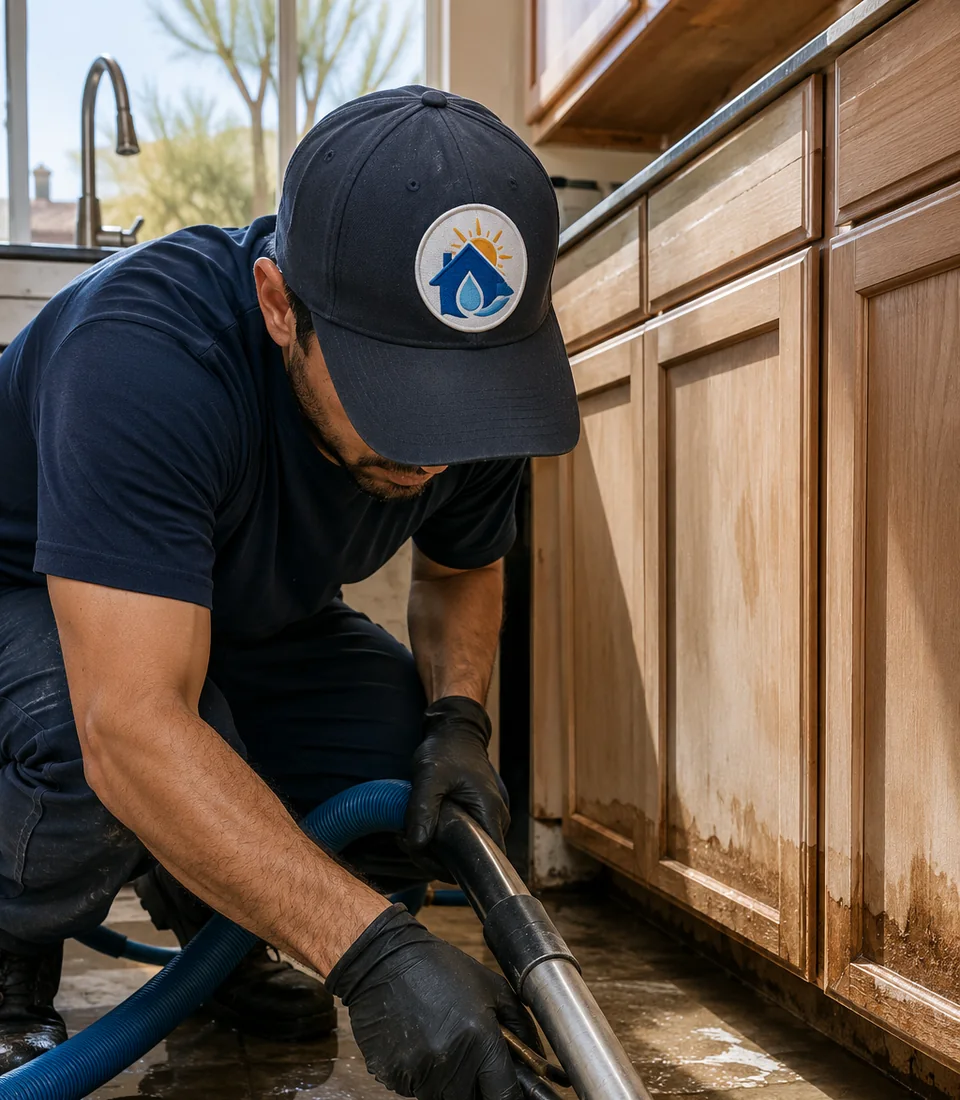
Water Extraction underway on a property in Tempe, AZ

IICRC S500 standard followed

Moisture readings logged until dry

Written scope before work starts

24/7 emergency response

Insurance-ready documentation

Last updated: 2026-08-30

Water Damage Tempe is a water damage restoration company serving Tempe and the Phoenix metro — including Mesa, Chandler, Scottsdale, Gilbert, and Phoenix, and water extraction is one of the services we handle most. This page covers what the work involves here specifically — the climate, the local causes, and what it costs — rather than what it involves in general.

What we do on the first visit

The first visit is an assessment, not a sales call. We identify the water category, check how far the water has migrated into flooring, subfloor, and walls, and take moisture readings to establish a baseline. We confirm whether the source is a slab leak, a failed appliance, or storm intrusion — and then you get a written scope with affected areas and any mold remediation as separate lines.

If we think a smaller mitigation job is the better spend than a full restoration, or the source needs a plumber before restoration can start, we say so on that visit — including when it means the smaller job for us.

What's included

  • Truck-mount or portable extraction to remove standing water fast
  • Moisture readings taken and logged across floors, subfloor, and walls to map how far the water traveled
  • Water category identified — clean, gray, or black — before extraction begins
  • Carpet, pad, and flooring assessed for what can be dried in place versus what has to come out
  • Baseboards pulled and weep holes drilled where needed so trapped water can escape wall cavities
  • Structural drying equipment set immediately after extraction, so the two phases run back to back
  • Time-stamped photos and moisture logs handed over for your records or an insurance claim
  • Written scope and price before any work beyond the assessment starts
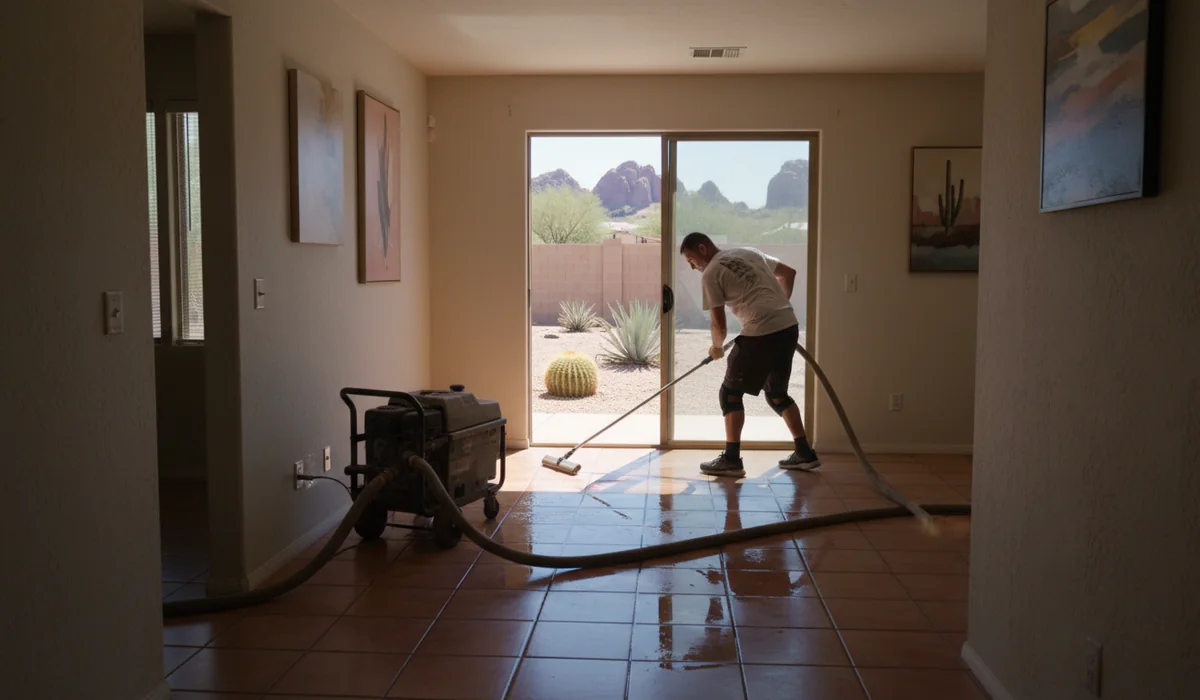
Water Extraction in progress on a property in Tempe, AZ

What this costs in Tempe

Water Extraction runs $2,251–$2,313 for a full restoration job in this area. This reflects a typical full water-damage-restoration job in Tempe, not extraction alone — based on Homeyou's Tempe-specific average of $2,251-$2,313, with a separate 2025 Maricopa County estimate slightly higher at $2,290-$2,418; the broader range cited across sources runs $1,200-$7,600 depending on the water category and square footage affected. Category 1 (clean water) work runs closer to $3-$4/sq ft, Category 3 (black water) closer to $7-$7.50/sq ft — extraction itself is one phase of that total, priced within the scope we write up on the first visit, not as a separate flat fee. The things that move a job up its range are the water category, how much square footage is affected, and how long the water sat before extraction started. If you want a number before you call, the water damage cost calculator will get you close.

When it needs doing

  • Standing water visible on flooring after a pipe burst, appliance failure, or storm intrusion
  • Carpet or pad that stays wet or squishes underfoot hours after the source is stopped
  • A warm spot on tile or an unexplained damp patch — a possible sign of a slab leak
  • Water intrusion after a monsoon storm through a flat or low-slope roof
  • A washing machine, water heater, or dishwasher failure that released standing water

Related reading

These go deeper on the questions that come up most on this job:

Straight comparison

DIY shop-vac, the cheapest bid, or the job done properly

 DIY shop-vacCheapest bidDone properly
Water extractionShop-vac and fans — surface water only, moisture stays trapped in subfloor and wallsBasic extraction, no moisture mappingTruck-mount extraction plus moisture mapping to find water that migrated under flooring and into walls
Drying equipmentA box fan or two, days longer than neededMinimum air movers, pulled earlyCommercial air movers and dehumidifiers, sized to the room and monitored to a dry standard
Water category handlingTreated the same regardless of sourceRarely distinguishedClean, gray, and black water handled to IICRC S500's different safety and disposal requirements
Mold riskNot checkedSkipped unless askedMoisture readings logged until the structure reads dry, since mold can begin in 24-48 hours
DocumentationNoneRarely providedTime-stamped photos and moisture logs, useful for an insurance claim
If it's not actually dryMold shows up later, now a bigger jobChasing a phone number that stopped workingWe come back and re-check until the readings confirm it's dry

How it works

How water extraction runs

  1. Call and describe the situation

    Tell us what happened — a burst pipe, appliance failure, slab leak, or storm intrusion — and we book a free on-site assessment, day or night.

  2. Identify the water category

    We determine whether it's Category 1 (clean), 2 (gray), or 3 (black) water before extraction starts, since that determines the safety and disposal requirements for everything that follows.

  3. Extract and map the moisture

    Standing water is removed with truck-mount or portable extraction equipment while we take moisture readings across floors, subfloor, and walls to find water that migrated out of sight.

  4. Hand off to structural drying

    Once the bulk water is out, drying equipment goes in immediately — extraction and drying are sequential phases of the same job, not two separate services you have to schedule twice.

Get a free water extraction assessment

A real person answers, day or night. We assess the damage, explain the water category, and give you a written scope — at no charge and with no pressure.

Questions

Water Extraction questions

How is water extraction different from structural drying?

Extraction removes standing and trapped water with pumps and vacuums — it's the first phase. Structural drying is the second phase, using air movers and dehumidifiers to pull remaining moisture out of framing, subfloor, and drywall until the structure reads dry. We treat them as sequential steps on the same job, not two separate services.

How fast do you need to start extraction after a pipe bursts?

As soon as possible — mold can begin colonizing water-damaged material within 24-48 hours, and the longer clean water sits, the more likely it degrades toward a gray-water classification. Speed is the single biggest factor in how much of the structure and flooring can be saved versus replaced.

Can water extraction happen if the source is a slab leak?

Yes, but the leak itself needs a plumber to stop it — we extract and dry the resulting damage, and coordinate with a plumber (yours or a referral) on the under-slab repair. Extracting water without stopping the source just means doing it again.

Do you extract water from carpet, or does it have to be pulled up?

It depends on how long the water sat and what category it is. Clean water caught quickly can often be extracted and dried in place with carpet and pad intact; water that sat longer, or any Category 2/3 water, usually means the pad — and sometimes the carpet — comes out. We tell you which situation you're in during the on-site assessment.

Do you charge for an on-site assessment?

No. On-site assessments are free across Tempe and the Phoenix metro — including Mesa, Chandler, Scottsdale, Gilbert, and Phoenix. We assess the damage, explain the water category, and hand you a written scope with affected areas and any mold remediation broken out as their own lines.

Call (480) 531-6541 — Live phone answer, day or night