
Skip to content
Water Damage Tempe

Tempe and the Phoenix metro — including Mesa, Chandler, Scottsdale, Gilbert, and Phoenix

Storm & Monsoon Flood Damage Restoration in Tempe, AZ

Storm and monsoon flood damage restoration in Tempe, AZ addresses the flat-roof ponding-water intrusion and flash-flood exposure specific to this market.

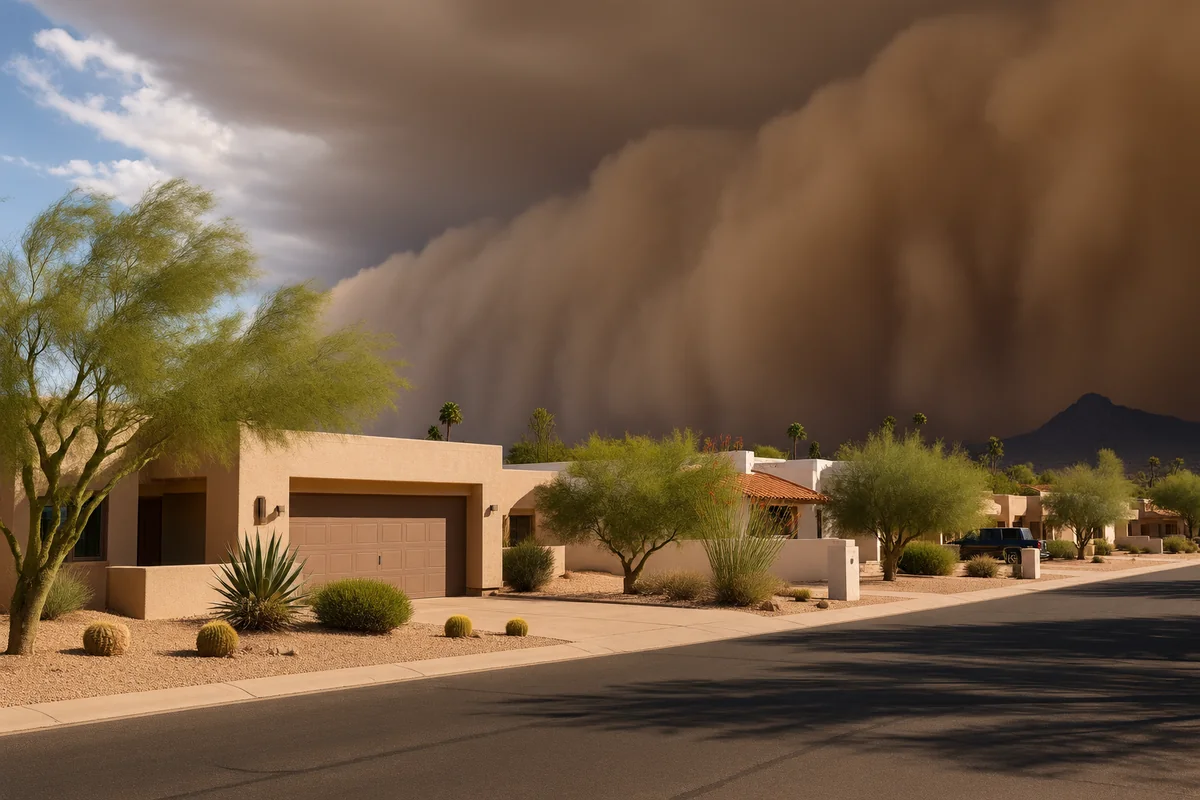
Storm & Monsoon Flood Damage Restoration underway on a property in Tempe, AZ

IICRC S500 standard followed

Moisture readings logged until dry

Written scope before work starts

24/7 emergency response

Insurance-ready documentation

Last updated: 2026-08-30

Water Damage Tempe is a water damage restoration company serving Tempe and the Phoenix metro — including Mesa, Chandler, Scottsdale, Gilbert, and Phoenix, and storm & monsoon flood damage restoration is one of the services we handle most. This page covers what the work involves here specifically — the climate, the local causes, and what it costs — rather than what it involves in general.

What we do on the first visit

The first visit is an assessment, not a sales call. We identify the water category, check how far the water has migrated into flooring, subfloor, and walls, and take moisture readings to establish a baseline. We confirm whether the source is a slab leak, a failed appliance, or storm intrusion — and then you get a written scope with affected areas and any mold remediation as separate lines.

If we think a smaller mitigation job is the better spend than a full restoration, or the source needs a plumber before restoration can start, we say so on that visit — including when it means the smaller job for us.

What's included

  • Emergency water extraction from flat or low-slope roof intrusion, window/door flooding, or flash-flood water entry
  • Roof-deck and ceiling assessment to trace ponding water back to the clogged drain or failed flashing that let it in
  • Moisture mapping across ceilings, walls, and flooring to find water that traveled beyond the visible entry point
  • Water category assessed — flash-flood water entering from outside is often treated as Category 2 or 3 depending on what it picked up
  • Structural drying set up once extraction is complete, sized to the affected area
  • Coordination with a roofer on the actual drain, flashing, or membrane repair, since we handle the water damage, not the roof
  • Documentation of the storm event and resulting damage for an insurance or flood-claim filing
  • Written scope separating storm-related water damage from any pre-existing wear, which insurers often ask about directly
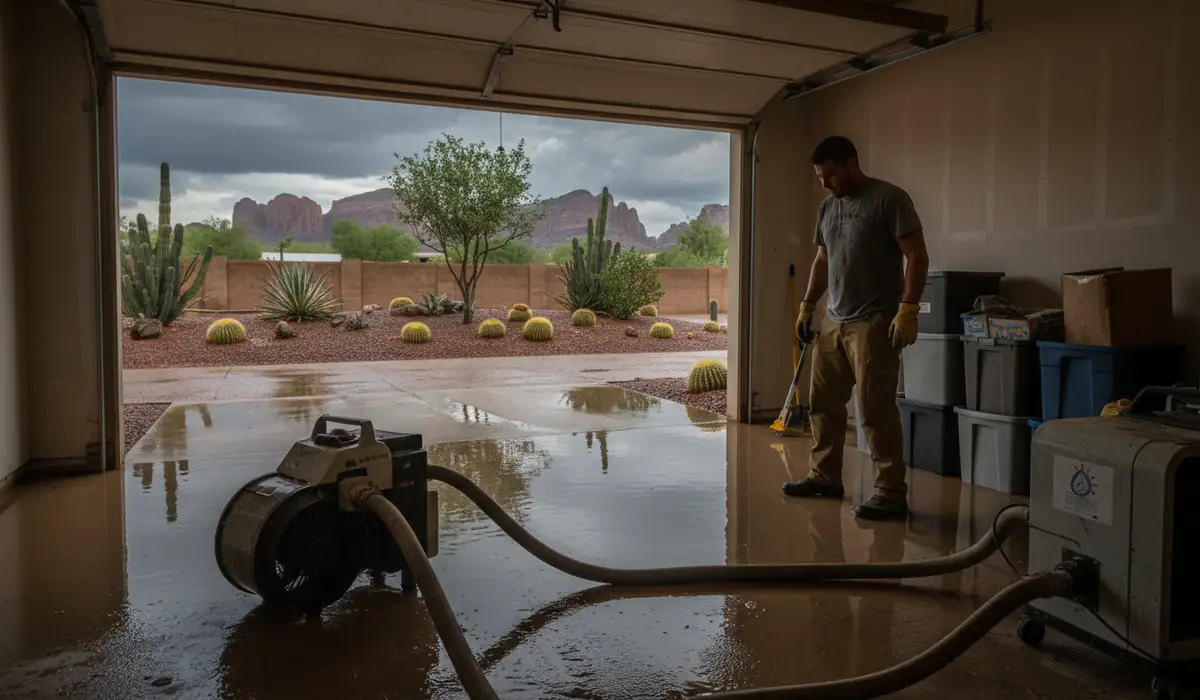
Storm & Monsoon Flood Damage Restoration in progress on a property in Tempe, AZ

What this costs

storm & monsoon flood damage restoration doesn't fit a single published price range, because the scope depends on what an on-site assessment of your specific property and situation finds. We give you a written scope and price after that free assessment, before any work starts.

When it needs doing

  • Ceiling staining or dripping after a monsoon storm, especially under a flat roof
  • Water intrusion around windows or doors during heavy wind-driven rain
  • Standing water at grade near the foundation after flash flooding
  • A roof drain visibly clogged with monsoon dust and debris
  • Musty odor developing in an attic or ceiling cavity after storm season
  • Water entering a garage or ground-floor room during a flash-flood event

Related reading

These go deeper on the questions that come up most on this job:

Straight comparison

DIY shop-vac, the cheapest bid, or the job done properly

 DIY shop-vacCheapest bidDone properly
Water extractionShop-vac and fans — surface water only, moisture stays trapped in subfloor and wallsBasic extraction, no moisture mappingTruck-mount extraction plus moisture mapping to find water that migrated under flooring and into walls
Drying equipmentA box fan or two, days longer than neededMinimum air movers, pulled earlyCommercial air movers and dehumidifiers, sized to the room and monitored to a dry standard
Water category handlingTreated the same regardless of sourceRarely distinguishedClean, gray, and black water handled to IICRC S500's different safety and disposal requirements
Mold riskNot checkedSkipped unless askedMoisture readings logged until the structure reads dry, since mold can begin in 24-48 hours
DocumentationNoneRarely providedTime-stamped photos and moisture logs, useful for an insurance claim
If it's not actually dryMold shows up later, now a bigger jobChasing a phone number that stopped workingWe come back and re-check until the readings confirm it's dry

How it works

How storm & monsoon flood damage restoration runs

  1. Assess the entry point

    We trace the water back to its source — a clogged roof drain, failed flashing, a flooded window well, or floodwater that entered at grade — since that determines both the water category and what needs a roofer versus what needs restoration.

  2. Extract fast

    Standing water is removed with truck-mount or portable extraction equipment while we map how far it migrated into ceilings, walls, and flooring.

  3. Dry and monitor

    Drying equipment goes in immediately after extraction, with daily moisture readings until the structure reaches a documented dry standard.

  4. Document for your claim

    You get time-stamped photos, moisture logs, and a written scope that separates storm-caused damage from anything pre-existing — the documentation most insurers ask for first.

Get a free storm & monsoon flood damage restoration assessment

A real person answers, day or night. We assess the damage, explain the water category, and give you a written scope — at no charge and with no pressure.

Questions

Storm & Monsoon Flood Damage Restoration questions

Why do flat roofs cause water damage differently than a pitched roof?

Phoenix-area homes commonly use flat or low-slope roof designs. Monsoon storms deposit dust and debris that clog roof drains, and ponding water finds weak points in aging roof coatings and flashing — a distinct failure mechanism from a pitched-roof shingle leak, and one that can sit unnoticed until it shows up as a ceiling stain.

How much flood risk does Tempe actually carry?

Flood-risk modeling estimates roughly 99% of Tempe buildings carry some flood risk, with an average ~19% chance of 2.3+ feet of flood depth over a 30-year window. Isolated monsoon flash flooding has affected areas near US-60/McClintock Dr and the Loop 101/Southern Ave interchange in recent monsoon seasons.

Does homeowners insurance cover monsoon flood damage?

It depends on the source. Wind-driven rain entering through a roof or window is typically a standard homeowners claim; water that rises from outside at ground level is usually a flood claim, which standard homeowners policies exclude — that's what separate flood insurance covers. We document which type of water intrusion you had, since it affects which claim you file.

What is SRP's flood/lateral irrigation, and is that a different issue?

Salt River Project's canal network still feeds flood/lateral irrigation to residential yards in parts of the East Valley — a genuine, locally specific water-intrusion vector separate from storm damage. If irrigation water is entering your home, it's reportable to SRP's 24-hour hotline in addition to any restoration work.

Do you charge for an on-site assessment?

No. On-site assessments are free across Tempe and the Phoenix metro — including Mesa, Chandler, Scottsdale, Gilbert, and Phoenix. We assess the damage, explain the water category, and hand you a written scope with affected areas and any mold remediation broken out as their own lines.

Call (480) 531-6541 — Live phone answer, day or night