
Skip to content
Water Damage Tempe

Tempe and the Phoenix metro — including Mesa, Chandler, Scottsdale, Gilbert, and Phoenix

Structural Drying in Tempe, AZ

Structural drying in Tempe, AZ pulls trapped moisture from framing and drywall, tracked by daily psychrometric readings until the structure is truly dry.

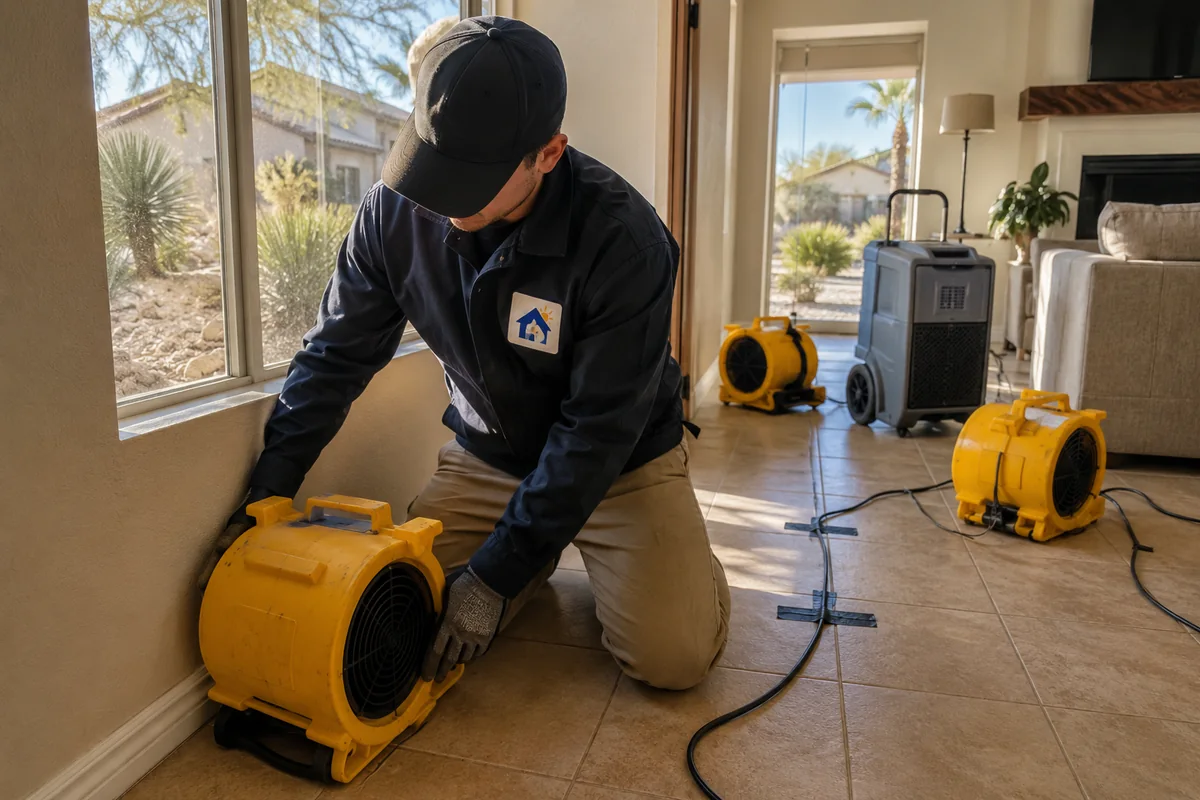
Structural Drying underway on a property in Tempe, AZ

IICRC S500 standard followed

Moisture readings logged until dry

Written scope before work starts

24/7 emergency response

Insurance-ready documentation

Last updated: 2026-08-30

Water Damage Tempe is a water damage restoration company serving Tempe and the Phoenix metro — including Mesa, Chandler, Scottsdale, Gilbert, and Phoenix, and structural drying is one of the services we handle most. This page covers what the work involves here specifically — the climate, the local causes, and what it costs — rather than what it involves in general.

What we do on the first visit

The first visit is an assessment, not a sales call. We identify the water category, check how far the water has migrated into flooring, subfloor, and walls, and take moisture readings to establish a baseline. We confirm whether the source is a slab leak, a failed appliance, or storm intrusion — and then you get a written scope with affected areas and any mold remediation as separate lines.

If we think a smaller mitigation job is the better spend than a full restoration, or the source needs a plumber before restoration can start, we say so on that visit — including when it means the smaller job for us.

What's included

  • Air movers and low-grain-refrigerant dehumidifiers placed to create a directional drying pattern across the affected structure
  • Daily psychrometric readings — temperature, relative humidity, and grains per pound — logged to track drying progress objectively
  • Moisture readings taken inside wall cavities and subfloor, not just surface checks, to confirm hidden material is drying
  • Containment barriers set when drying a limited area, so equipment doesn't have to run across rooms that were never wet
  • Baseboards pulled and small access holes drilled where trapped water needs an escape path out of wall cavities
  • Daily equipment checks and readings adjustments as the structure dries, rather than a fixed number of days set in advance
  • A documented drying goal — matching moisture content to an unaffected reference material in the same structure — before equipment comes out
  • Time-stamped moisture logs handed over for your records or an insurance claim, showing the structure actually reached dry standard
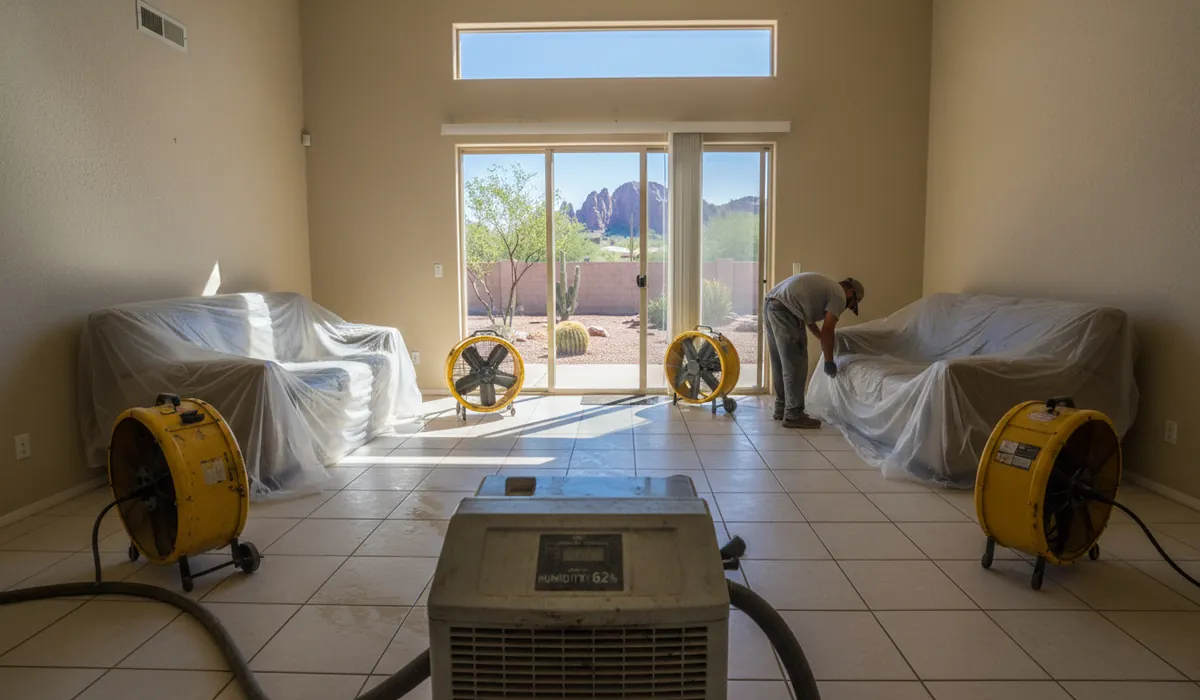
Structural Drying in progress on a property in Tempe, AZ

What this costs

structural drying doesn't fit a single published price range, because the scope depends on what an on-site assessment of your specific property and situation finds. We give you a written scope and price after that free assessment, before any work starts.

When it needs doing

  • A room that still smells musty or damp days after visible water was cleaned up
  • Warped baseboards, buckling flooring, or bubbling paint after any water event
  • A humid or clammy feel in a room compared to the rest of the house
  • Condensation on windows or interior surfaces that wasn't there before the water event
  • A structure that was extracted but never had drying equipment or moisture readings follow
  • Musty odor returning after a DIY cleanup with fans and open windows

Related reading

These go deeper on the questions that come up most on this job:

Straight comparison

DIY shop-vac, the cheapest bid, or the job done properly

 DIY shop-vacCheapest bidDone properly
Water extractionShop-vac and fans — surface water only, moisture stays trapped in subfloor and wallsBasic extraction, no moisture mappingTruck-mount extraction plus moisture mapping to find water that migrated under flooring and into walls
Drying equipmentA box fan or two, days longer than neededMinimum air movers, pulled earlyCommercial air movers and dehumidifiers, sized to the room and monitored to a dry standard
Water category handlingTreated the same regardless of sourceRarely distinguishedClean, gray, and black water handled to IICRC S500's different safety and disposal requirements
Mold riskNot checkedSkipped unless askedMoisture readings logged until the structure reads dry, since mold can begin in 24-48 hours
DocumentationNoneRarely providedTime-stamped photos and moisture logs, useful for an insurance claim
If it's not actually dryMold shows up later, now a bigger jobChasing a phone number that stopped workingWe come back and re-check until the readings confirm it's dry

How it works

How structural drying runs

  1. Confirm extraction is complete

    Structural drying starts once standing water is out. We confirm bulk water has been removed and identify which materials — framing, subfloor, drywall, insulation — are still holding moisture.

  2. Set equipment and a drying pattern

    Air movers and dehumidifiers go in based on the room's size, humidity, and how far the water traveled — not just how big the room is.

  3. Take daily psychrometric readings

    We log temperature, humidity, and moisture content in affected materials every visit, so drying progress is measured against numbers, not guesswork.

  4. Confirm dry standard and remove equipment

    Equipment comes out once moisture readings in affected material match an unaffected reference point in the same structure — not on a fixed schedule.

Get a free structural drying assessment

A real person answers, day or night. We assess the damage, explain the water category, and give you a written scope — at no charge and with no pressure.

Questions

Structural Drying questions

How long does structural drying actually take?

Most residential jobs run 3-5 days, but it depends on how much material absorbed water, the water category, and indoor humidity once air conditioning is involved. We take daily readings and tell you where the structure stands rather than quoting a fixed number upfront.

Do I have to leave the house while drying equipment runs?

No — air movers and dehumidifiers are loud but the space is safe to occupy. Some homeowners choose to stay elsewhere for comfort, especially with equipment running around the clock, but it isn't required.

How is structural drying different from just running fans at home?

Household fans move air across a surface; they don't measure whether the material underneath is actually drying, and Arizona's low ambient humidity can make a surface feel dry while framing and subfloor still hold moisture. Psychrometric readings confirm a material has actually reached dry standard, not how it looks or feels.

Can drywall or flooring be saved during structural drying, or does it get replaced?

Often, yes — clean water caught early and dried within industry-standard timeframes can frequently save drywall and some flooring. Category 2 or 3 water, or material that stayed wet too long, more often needs to come out. We tell you which category your job falls into during the assessment.

Do you charge for an on-site assessment?

No. On-site assessments are free across Tempe and the Phoenix metro — including Mesa, Chandler, Scottsdale, Gilbert, and Phoenix. We assess the damage, explain the water category, and hand you a written scope with affected areas and any mold remediation broken out as their own lines.

Call (480) 531-6541 — Live phone answer, day or night