
Learn
Can Water-Damaged Drywall or Flooring Be Saved, or Does It Need Replacing?
Whether water-damaged drywall or flooring can be dried and saved versus replaced depends on the water category, how long it sat, and the material itself — here's how that call actually gets made.
Clean water caught within hours can often be dried and saved, in both drywall and most flooring types. Water that sat longer, reached Category 2 or 3, or has caused visible swelling, warping, or a persistent musty smell usually needs replacement. The decision is made material by material during the assessment, not as a blanket rule for the whole room.
Published 2026-08-15 · Updated 2026-08-30
Water Damage Tempe is a water damage restoration company serving Tempe, AZ and the Phoenix metro, and “can this be saved” is a question we answer material by material on every job, not with a single rule for an entire room.
The factors that actually decide it
Four things determine whether a wet material gets dried and kept or removed and replaced: the water category (clean water gives materials a real chance; gray or black water usually doesn’t), how long the material was wet before extraction started, the material itself (some materials tolerate moisture far better than others), and whether structural drying can actually reach all the way through it — not just the visible surface.
Drywall
Drywall is porous gypsum sandwiched in paper, which makes it both easy to test and easy to over-save if you’re not careful. Clean water that’s been in contact with drywall for a short time — hours, not days — can often be dried in place using structural drying equipment, with moisture meters confirming the material has returned to a normal dry reading all the way through, not just at the surface. Drywall that’s visibly bulging, sagging, crumbling under light pressure, or that was exposed to Category 2 or 3 water almost always needs to be cut out and replaced — those are signs the paper backing and gypsum core have already broken down structurally, which drying can’t reverse. A cut line is typically made a few inches above the visible waterline to ensure no wicked moisture is left behind the new material.
Flooring
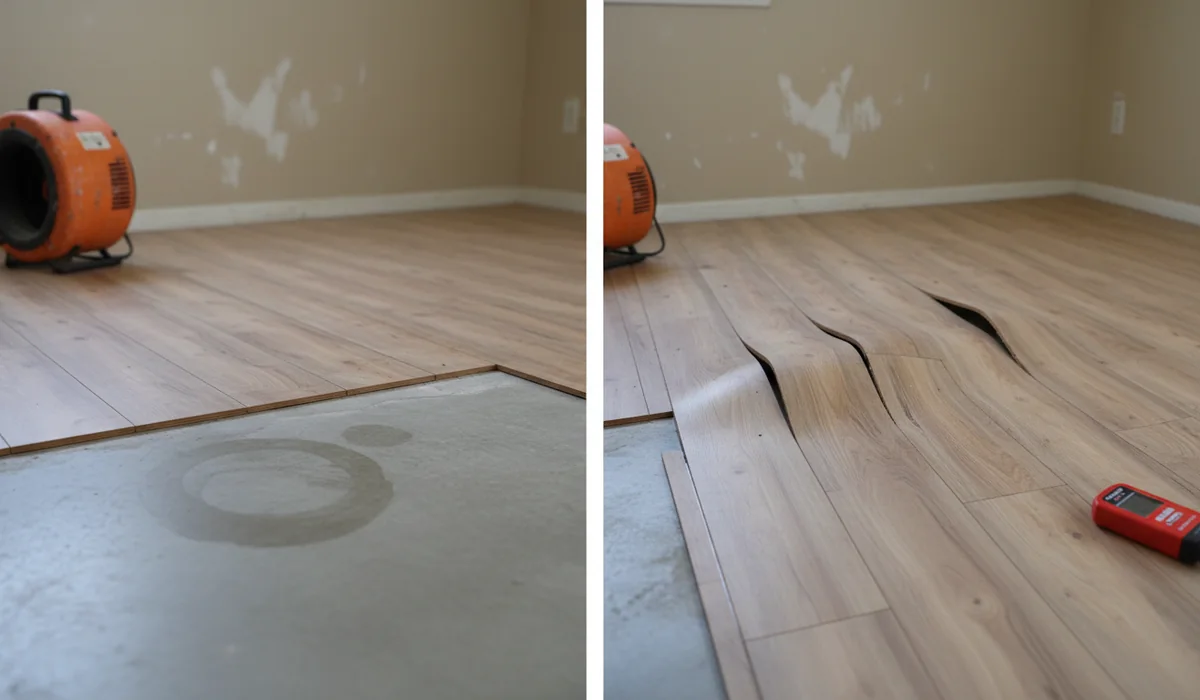
Flooring’s fate depends heavily on the material. Solid tile with a sound substrate underneath often survives water exposure well, since the tile itself is essentially waterproof — the real question is whether water got trapped in the mortar bed or subfloor below it, which requires drying from underneath or through grout lines. Engineered and laminate flooring are far less forgiving: even a short exposure to standing water can cause swelling, buckling, or delamination that doesn’t reverse once it happens, meaning replacement is often the only real option regardless of how quickly extraction started. Carpet depends on the pad more than the carpet itself — see our extraction process guide for how that in-place-vs-pull-up decision gets made during the assessment.
Subfloor
Subfloor (typically plywood or OSB under the visible flooring) is where a lot of hidden damage lives, because it’s rarely inspected unless the flooring above it is already coming up. Subfloor that’s been saturated long enough to swell, delaminate, or show soft spots when walked on usually needs to be replaced — drying can stop further damage but generally can’t reverse structural swelling that’s already occurred. This is one reason the moisture-mapping step during extraction matters as much as it does: catching subfloor moisture early, before it swells, is the difference between drying it in place and tearing up flooring to replace it later.
When “save it” is actually the wrong call, even if it’s technically possible
Sometimes a material can be dried enough to pass a moisture meter reading but still isn’t worth saving — heavily stained drywall in a visible area, carpet that’s absorbed enough contamination to retain odor even after cleaning, or flooring with cosmetic warping that a meter reading won’t fix. The technical “can it be dried” question and the practical “should it be kept” question aren’t always the same answer, and part of a proper assessment is being honest about both.
The bottom line
The save-vs-replace decision comes down to water category, time, and material — not a guess, and not a blanket policy either way. We’d rather dry and save what genuinely can be saved than default to replacing everything, since an honest assessment protects your budget as much as it protects the property. Call (480) 531-6541 for a free on-site assessment, and we’ll tell you exactly what’s salvageable in your specific situation before any work starts.
Related reading
The bottom line
If you want this priced for your own property rather than in ranges, we come out and assess at no charge across Tempe and the Phoenix metro — including Mesa, Chandler, Scottsdale, Gilbert, and Phoenix. You get a written scope with the water category and affected areas broken out separately. Call (480) 531-6541.