
Maricopa County · Directly borders Tempe to the east via US-60
Water Damage Restoration in Mesa, AZ
Water Damage Tempe is a water damage restoration company providing water extraction, structural drying, and mold remediation in Mesa, AZ — live phone answer, 24/7.
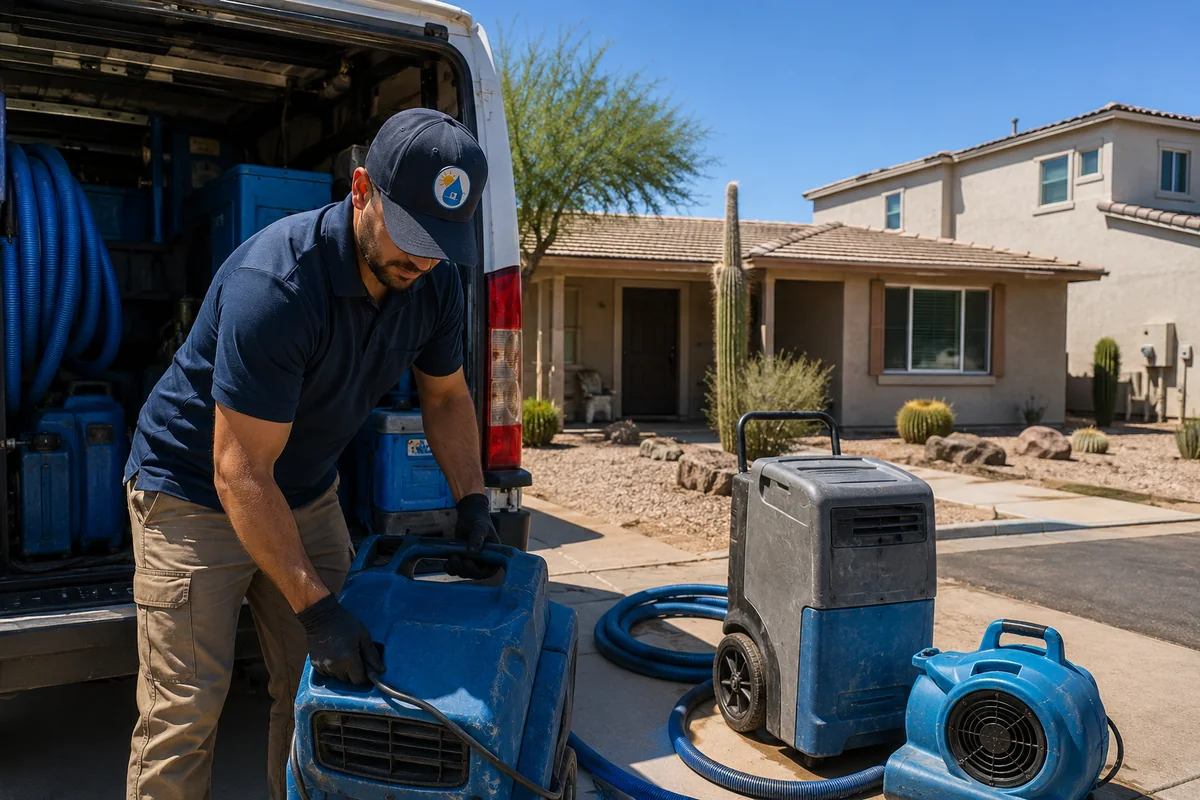
IICRC S500 standard followed
Moisture readings logged until dry
Written scope before work starts
24/7 emergency response
Insurance-ready documentation
Sound familiar?
The four reasons people in Mesa call about water damage
A pipe just burst
Water is actively spreading in your Mesa property, and mold can begin colonizing damaged material within 24-48 hours — speed matters more than almost anything else here.
A slow, mysterious wet patch
A warm spot on tile or a damp patch of carpet with no obvious source is a classic sign of a slab leak that’s been running for a while — common across this market’s slab-on-grade construction.
Monsoon storm flooding in Mesa
Flat and low-slope roofs common on Phoenix-area homes pond water when monsoon debris clogs the drains, finding weak points in aging roof coatings and flashing.
Sewage backup
A biohazard situation that needs professional handling, not a DIY cleanup — Category 3 water carries real health risk.
Most requested in Mesa
What we do in Mesa
Water Extraction
Water extraction in Tempe, AZ removes standing water fast, mapped with moisture readings before mold sets in — a written scope before any work starts.
Details →Structural Drying
Structural drying in Tempe, AZ pulls trapped moisture from framing and drywall, tracked by daily psychrometric readings until the structure is truly dry.
Details →Mold Remediation
Mold remediation in Tempe, AZ contains and removes mold that starts colonizing wet material within 24-48 hours, with HEPA air scrubbing and a clearance check.
Details →Sewage & Black Water Cleanup
Sewage cleanup in Tempe, AZ treats every backup as Category 3 black water — full PPE, contaminated material removal, and disinfection to a sanitary standard.
Details →How it works
How we handle a Mesa loss
Call — day or night
Tell us what happened. A real person answers, 24/7, and we book a free on-site assessment.
We assess the damage
We identify the water category, check how far it has migrated into flooring, subfloor, and walls, and take moisture readings to establish a baseline.
Extraction and drying
Water extracted, affected materials addressed, and structural drying equipment set and monitored until the readings confirm the property is dry.
Documentation and walkthrough
Time-stamped photos and moisture logs handed over, useful for an insurance claim, and we walk the finished job with you before we leave.
Water damage in Mesa: what's actually different here
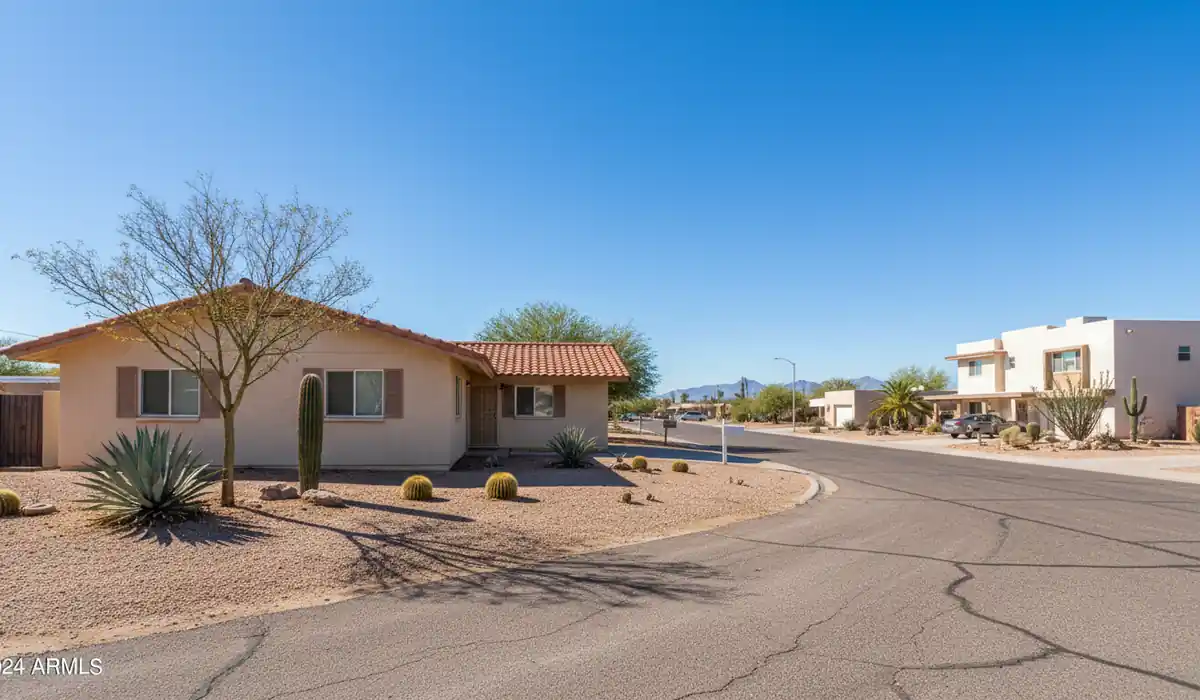
Mesa is Arizona's third-largest city and the largest single population center directly on Tempe's border — roughly 523,220 people as of 2025, reached from our base along US-60 (the Superstition Freeway) in minutes. The same regional physical realities that drive water damage in Tempe apply here too: frost-free, slab-on-grade construction and caliche hardpan soil that makes a full basement rare and expensive, hard Phoenix-area water that accelerates corrosion in copper supply lines run under the slab, and monsoon season's flat and low-slope roofs that pond water when storm debris clogs the drains. What's different in Mesa is the range of housing stock those risks sit on top of — 1950s-70s ranch homes in central neighborhoods like Alta Mesa carry the same slab-on-grade code history as Tempe's older housing, while large 2000s-and-newer master-planned communities on the city's edges — Eastmark (built on the former General Motors proving ground in southeast Mesa), Las Sendas (a foothill golf community near Usery Mountain), and Red Mountain Ranch — put slab leaks and monsoon roof intrusion on decades-newer construction as well.
Maricopa County has recorded 661 flood events totaling $68.9 million in damage, per flood-risk mapping sources, and Mesa carries real exposure inside that county-wide figure. US-60 and Loop 202 both cross low-lying washes on the east side of the city near Superstition Springs and Eastmark, and Red Mountain and the Superstition foothills funnel monsoon runoff toward those same lower-elevation areas during the June 15-September 30 monsoon season. A flat-roof home a mile from the freeway and a flat-roof home a mile from the foothills can flood for two different reasons in the same storm — drainage backup versus runoff — and knowing which one you're dealing with changes where we look for hidden moisture first.
Mesa's customer mix looks different from Tempe's ASU-driven, majority-renter housing profile — most of Mesa's neighborhoods skew toward single-family homeowner households, though the city still carries real commercial exposure of its own: Boeing's Mesa plant has built AH-64 Apache helicopters since 1975 and remains one of the city's larger employers, and Banner Health operates major medical facilities here, both representing a commercial water damage risk profile — server rooms, records storage, patient care areas — distinct from a single-family slab leak. Valley Metro's light rail reaches into central Mesa via the Gilbert Road Extension, running along Main Street with a station at Main Street and Country Club Drive, which is one more reason a Mesa dispatch from our Tempe base along US-60 or Loop 202 doesn't cost you response time.
Why us
Built around this desert market's real water-damage risks, not a generic flood-cleanup script
We know Phoenix-metro homes rarely have basements
Water damage here shows up as slab leaks, water heater failures, AC and evaporative-cooler leaks, and monsoon roof intrusion — not a flooded basement. We scope the job around where the water actually is, not where a national script assumes it is.
Why Arizona homes don’t have basements →We check for a slab leak before we treat the surface
Arizona's hard water and expansive clay soil make slab leaks a common, often-hidden cause of water damage under flooring and walls. We look for the source, not just the visible wet patch.
Caliche soil and slab leaks →Written scope, not a phone-call-only number
You get a scope and price before work starts, with the water category and affected areas broken out as their own lines. No day-of surprises.
We work with landlords and property managers, not just single-family homeowners
Tempe's ASU-driven rental market means water damage often involves a landlord, a property manager, or a shared plumbing stack — we coordinate with whoever needs to be looped in.
Landlord & property manager guide →
Neighborhoods
Areas of Mesa we work in
- Downtown Mesa (Mesa Arts District)
- Dobson Ranch
- Las Sendas
- Eastmark
- Superstition Springs
- Red Mountain Ranch
- Alta Mesa
Around town
Landmarks we work near
- Mesa Arts Center
- Sloan Park (Chicago Cubs spring training)
- Usery Mountain Regional Park
- Mesa Riverview
- Falcon Field (Airbase Arizona Aircraft Museum)
- Red Mountain
Local economy
Boeing (AH-64 Apache helicopter production since 1975) · Banner Health
How we reach you
Getting to Mesa
- US-60 (Superstition Freeway) — connects west to Tempe and Phoenix
- Loop 202 (Red Mountain Freeway) — the SuperRedTan interchange joins it to US-60 in Mesa
- SR-87 (Beeline Highway) — becomes Country Club Drive through Mesa
- Gilbert Road corridor
Transit: Valley Metro Light Rail's Gilbert Road Extension (opened May 2019) runs along Main Street through central Mesa, with a station at Main Street and Country Club Drive.
Service area
Mesa, AZ on the map
Mesa, AZ · Maricopa County
Population 523,220 · 1,243 ft elevation
Directly borders Tempe to the east via US-60.
View Mesa on the map →Questions
Water damage questions from Mesa
How much does water damage restoration cost in Mesa, AZ?
Mesa sits inside the same county-wide pricing data as the rest of the Phoenix metro: a 2025 Maricopa County average of $2,290-$2,418, with the broader range across sources running $1,200-$7,600 depending on the water category and how much square footage is affected. Category 1 (clean water) extraction runs closer to $3-$4/sq ft; Category 3 (black water) closer to $7-$7.50/sq ft. A free on-site assessment gets you a specific number for your property.
How fast can you get to a water damage call in Mesa?
A real person answers the phone 24/7, and we book a free on-site assessment as soon as you call — Mesa sits directly across the US-60/Loop 202 corridor from our Tempe base, so a Mesa dispatch doesn't add meaningfully to response time.
Does it matter that my Mesa home is older or newer than most?
Not for whether a slab leak or monsoon roof intrusion can happen — both risks apply across Mesa's housing stock, from 1950s-70s central-Mesa homes in neighborhoods like Alta Mesa to 2000s-and-newer master-planned communities like Eastmark and Las Sendas, since all of it sits on the same slab-on-grade, caliche-soil foundation code. It does affect what we look for first: older copper supply lines under the slab are the more common failure point in central Mesa, while newer construction more often shows up as a roof, appliance, or fixture failure.
Is monsoon flooding a real risk in Mesa?
Yes — Maricopa County has recorded 661 flood events totaling $68.9 million in damage, and parts of east Mesa near Superstition Springs and Eastmark, close to where US-60 and Loop 202 cross low-lying washes, see real flash-flood and roof-ponding exposure during monsoon season (June 15-September 30).
Do you handle commercial water damage for Mesa businesses?
Yes — Mesa has real commercial exposure beyond single-family homes, from Boeing's Apache helicopter plant to Banner Health's medical facilities, and we handle commercial water damage restoration with documentation built for a business's insurance and continuity needs, not just a homeowner's claim.
Nearby
We also serve these areas
Free water damage assessment in Mesa
Live phone answer, 24/7. We assess the damage, identify the water category, and hand you a written scope.