
Maricopa County · Near Tempe via Chandler/Mesa, a short drive southeast
Water Damage Restoration in Gilbert, AZ
Water Damage Tempe is a water damage restoration company providing water extraction, structural drying, and mold remediation in Gilbert, AZ — live phone answer, 24/7.
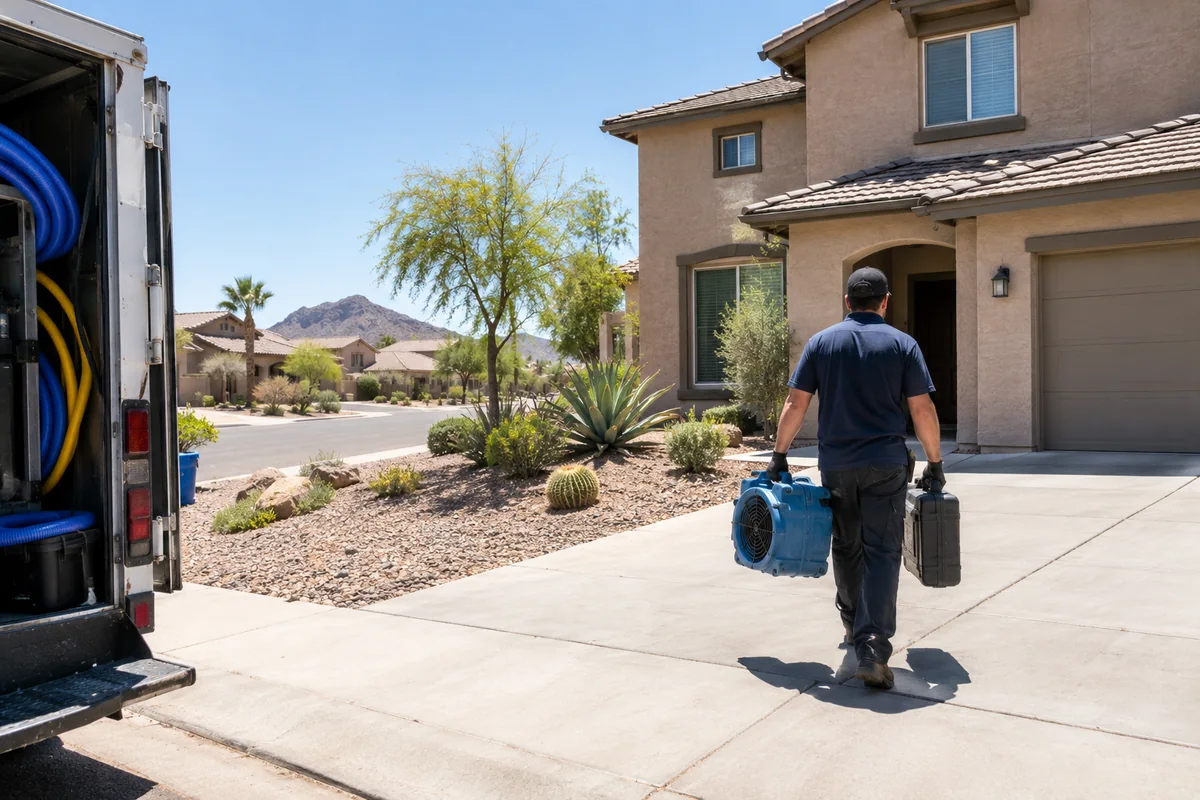
IICRC S500 standard followed
Moisture readings logged until dry
Written scope before work starts
24/7 emergency response
Insurance-ready documentation
Sound familiar?
The four reasons people in Gilbert call about water damage
A pipe just burst
Water is actively spreading in your Gilbert property, and mold can begin colonizing damaged material within 24-48 hours — speed matters more than almost anything else here.
A slow, mysterious wet patch
A warm spot on tile or a damp patch of carpet with no obvious source is a classic sign of a slab leak that’s been running for a while — common across this market’s slab-on-grade construction.
Monsoon storm flooding in Gilbert
Flat and low-slope roofs common on Phoenix-area homes pond water when monsoon debris clogs the drains, finding weak points in aging roof coatings and flashing.
Sewage backup
A biohazard situation that needs professional handling, not a DIY cleanup — Category 3 water carries real health risk.
Most requested in Gilbert
What we do in Gilbert
Water Extraction
Water extraction in Tempe, AZ removes standing water fast, mapped with moisture readings before mold sets in — a written scope before any work starts.
Details →Structural Drying
Structural drying in Tempe, AZ pulls trapped moisture from framing and drywall, tracked by daily psychrometric readings until the structure is truly dry.
Details →Mold Remediation
Mold remediation in Tempe, AZ contains and removes mold that starts colonizing wet material within 24-48 hours, with HEPA air scrubbing and a clearance check.
Details →Sewage & Black Water Cleanup
Sewage cleanup in Tempe, AZ treats every backup as Category 3 black water — full PPE, contaminated material removal, and disinfection to a sanitary standard.
Details →How it works
How we handle a Gilbert loss
Call — day or night
Tell us what happened. A real person answers, 24/7, and we book a free on-site assessment.
We assess the damage
We identify the water category, check how far it has migrated into flooring, subfloor, and walls, and take moisture readings to establish a baseline.
Extraction and drying
Water extracted, affected materials addressed, and structural drying equipment set and monitored until the readings confirm the property is dry.
Documentation and walkthrough
Time-stamped photos and moisture logs handed over, useful for an insurance claim, and we walk the finished job with you before we leave.
Water damage in Gilbert: what's actually different here
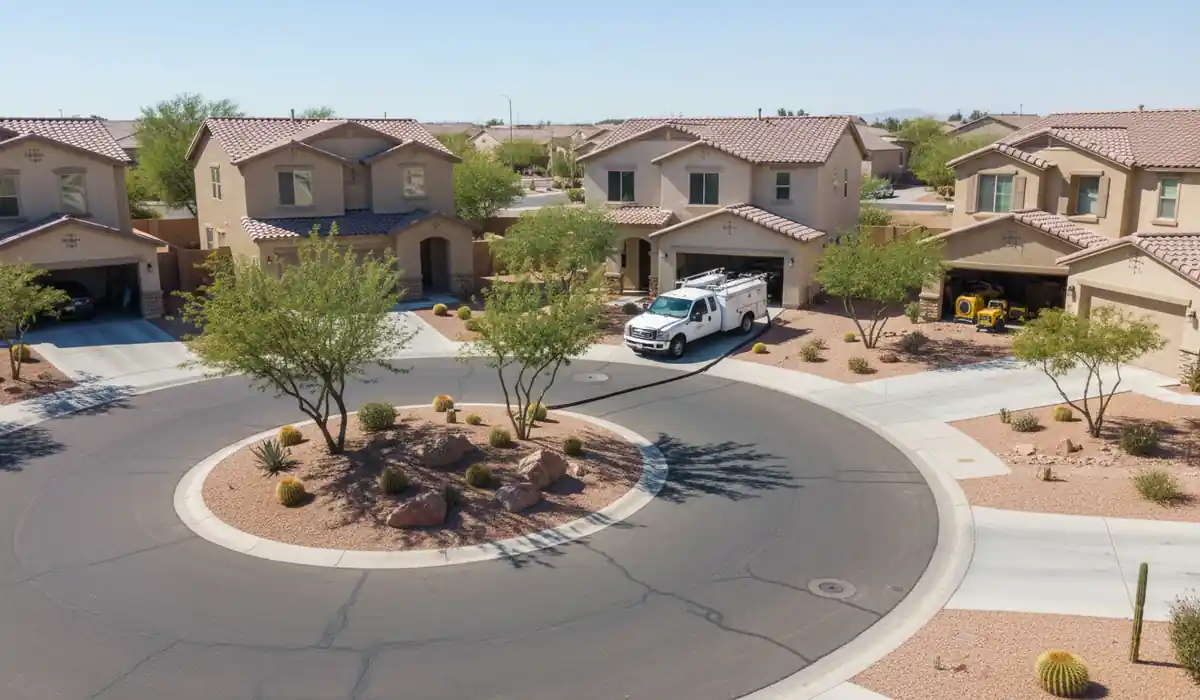
Gilbert is the most populous incorporated town in the United States, not a city, and it's reached from our Tempe base in about 20 minutes down Loop 202 through Chandler or Mesa. The same regional geology drives water damage here as everywhere in the East Valley — frost-free slab-on-grade construction instead of a dug basement, hard Phoenix-area water corroding copper supply lines under that slab, and flat or low-slope roofs that pond water when monsoon debris clogs the drains — but almost none of Gilbert's housing predates the 1990s. The town grew 410% between 1980 and 1990 alone, and its defining neighborhoods reflect that: Agritopia (built starting in the 2000s on a working farm, still home to a working USDA-certified organic farm and farmers market inside the community), Morrison Ranch (a 3,000-acre community on farmland the Morrison family worked since the 1920s), and Power Ranch put decades-younger construction on the identical slab-leak and monsoon-roof risk the rest of this research documents.
That newer-construction profile changes what actually shows up first when water damage happens in Gilbert. Older Phoenix-metro neighborhoods see slab leaks concentrated in aging copper lines that have had decades to corrode under hard water; Gilbert's much younger plumbing hasn't had that runway yet, so a slab leak here is more often tied to a specific installation issue, a fitting failure, or ground movement in the expansive clay under a still-settling foundation than to sheer age. Appliance and fixture failures — water heaters, washing-machine supply lines, refrigerator ice-maker lines — are a proportionally bigger share of Gilbert's non-storm water damage calls than in Tempe's older housing stock, simply because there's more new construction here per capita than almost anywhere else in the East Valley.
Gilbert's own relationship with water is unusually visible for a desert town — the Riparian Preserve at Water Ranch, a 110-acre wetland and reclaimed-water park with seven ponds and more than 4.5 miles of trails, sits in the middle of the community as a reminder of how much engineered water management already runs through the town. That doesn't reduce the ordinary monsoon risk to an individual roof: flat and low-slope construction across Gilbert's newer subdivisions ponds water the same way it does anywhere else in the Phoenix metro when June-through-September storm debris clogs the drains, and master-planned communities built around retention lakes — Val Vista Lakes, Circle G Ranches — see the same under-slab and appliance-driven leaks as the rest of the town, just with a lake a few hundred feet closer.
Why us
Built around this desert market's real water-damage risks, not a generic flood-cleanup script
We know Phoenix-metro homes rarely have basements
Water damage here shows up as slab leaks, water heater failures, AC and evaporative-cooler leaks, and monsoon roof intrusion — not a flooded basement. We scope the job around where the water actually is, not where a national script assumes it is.
Why Arizona homes don’t have basements →We check for a slab leak before we treat the surface
Arizona's hard water and expansive clay soil make slab leaks a common, often-hidden cause of water damage under flooring and walls. We look for the source, not just the visible wet patch.
Caliche soil and slab leaks →Written scope, not a phone-call-only number
You get a scope and price before work starts, with the water category and affected areas broken out as their own lines. No day-of surprises.
We work with landlords and property managers, not just single-family homeowners
Tempe's ASU-driven rental market means water damage often involves a landlord, a property manager, or a shared plumbing stack — we coordinate with whoever needs to be looped in.
Landlord & property manager guide →
Neighborhoods
Areas of Gilbert we work in
- Heritage District (Downtown Gilbert)
- Agritopia
- Morrison Ranch
- Val Vista Lakes
- Power Ranch
- Circle G Ranches
Around town
Landmarks we work near
- Riparian Preserve at Water Ranch
- Gilbert Arizona Temple
- Hale Centre Theatre
- Gilbert Historical Museum
- Liberty Market and its historic water tower
- SanTan Village
Local economy
Banner Gateway Medical Center (and the adjoining Banner MD Anderson Cancer Center) · Gilbert Public Schools · Fry's Food and Drug
How we reach you
Getting to Gilbert
- Loop 202 (Santan Freeway) — Gilbert's primary freeway connection
- US-60 (Superstition Freeway) — skirts Gilbert's northern boundary near Higley Road
- Gilbert Road
- Val Vista Drive
- Williams Field Road
Transit: Gilbert has no light rail of its own; the nearest Valley Metro light rail station sits just across the Mesa border at Main Street and Country Club Drive, and local bus routes run at limited frequency — most Gilbert residents get around by car or bike.
Service area
Gilbert, AZ on the map
Gilbert, AZ · Maricopa County
Population 291,000 · 1,180 ft elevation
Near Tempe via Chandler/Mesa, a short drive southeast.
View Gilbert on the map →Questions
Water damage questions from Gilbert
How much does water damage restoration cost in Gilbert, AZ?
Gilbert sits inside the same Maricopa County pricing data as the rest of the East Valley: a 2025 average of $2,290-$2,418, with the broader range across sources running $1,200-$7,600 depending on water category and affected square footage. Category 1 (clean water) extraction runs closer to $3-$4/sq ft; Category 3 (black water) closer to $7-$7.50/sq ft. A free on-site assessment gets you a number specific to your property.
My Gilbert home is newer construction — can it still have a slab leak?
Yes. Almost all of Gilbert's housing sits on the same slab-on-grade, caliche-soil foundation code as the rest of the Phoenix metro, and expansive clay soil shifts under a foundation regardless of the home's age. What's different in Gilbert is the cause: newer under-slab copper hasn't had the decades of hard-water corrosion that drives most slab leaks in older neighborhoods, so a leak here is more often tied to an installation issue or ground movement than to aging pipe.
Do you handle water damage in Gilbert's master-planned communities like Agritopia and Morrison Ranch?
Yes — Agritopia, Morrison Ranch, Power Ranch, Val Vista Lakes, and Circle G Ranches all carry the same slab-on-grade construction and monsoon flat-roof exposure as the rest of Gilbert, just on newer plumbing and, in the lake communities, with water sitting closer to the house.
Is monsoon flooding a real risk in Gilbert?
Yes — Gilbert sits inside the same Maricopa County flood-risk picture as the rest of the East Valley, and the flat and low-slope roofs common across the town's newer subdivisions pond water the same way older construction does elsewhere in the metro when June 15-September 30 storm debris clogs the drains.
How fast can you get to a water damage call in Gilbert?
A real person answers the phone 24/7, and we book a free on-site assessment as soon as you call. Gilbert sits about 20 minutes from our Tempe base via Chandler or Mesa, so a Gilbert dispatch doesn't add meaningfully to response time.
Nearby
We also serve these areas
Free water damage assessment in Gilbert
Live phone answer, 24/7. We assess the damage, identify the water category, and hand you a written scope.