
Skip to content
Water Damage Tempe

Tempe and the Phoenix metro — including Mesa, Chandler, Scottsdale, Gilbert, and Phoenix

Mold Remediation in Tempe, AZ

Mold remediation in Tempe, AZ contains and removes mold that starts colonizing wet material within 24-48 hours, with HEPA air scrubbing and a clearance check.

Typical range: $927–$2,745 averaging $1,836

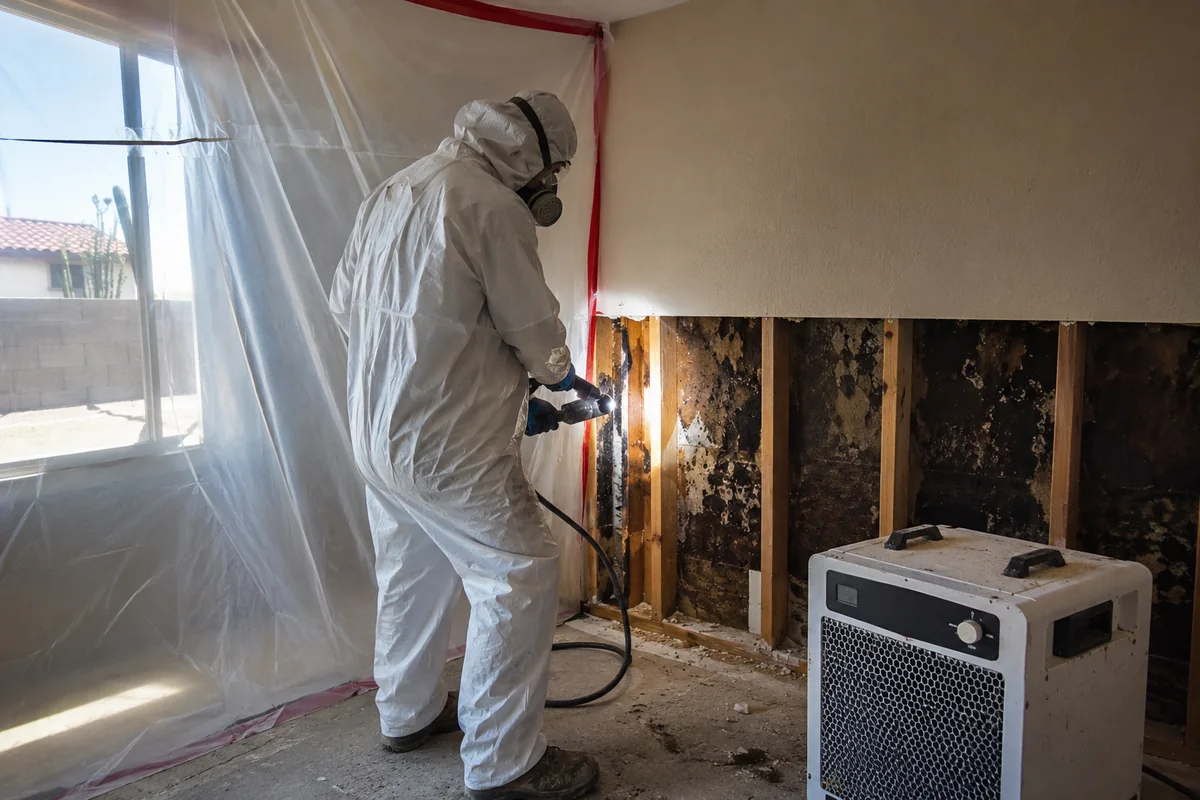
Mold Remediation underway on a property in Tempe, AZ

IICRC S500 standard followed

Moisture readings logged until dry

Written scope before work starts

24/7 emergency response

Insurance-ready documentation

Last updated: 2026-08-30

Water Damage Tempe is a water damage restoration company serving Tempe and the Phoenix metro — including Mesa, Chandler, Scottsdale, Gilbert, and Phoenix, and mold remediation is one of the services we handle most. This page covers what the work involves here specifically — the climate, the local causes, and what it costs — rather than what it involves in general.

What we do on the first visit

The first visit is an assessment, not a sales call. We identify the water category, check how far the water has migrated into flooring, subfloor, and walls, and take moisture readings to establish a baseline. We confirm whether the source is a slab leak, a failed appliance, or storm intrusion — and then you get a written scope with affected areas and any mold remediation as separate lines.

If we think a smaller mitigation job is the better spend than a full restoration, or the source needs a plumber before restoration can start, we say so on that visit — including when it means the smaller job for us.

What's included

  • Visual inspection and moisture mapping to find the source feeding the mold, not just the visible growth
  • Physical containment barriers (poly sheeting, negative air pressure) to stop spores from spreading to unaffected rooms during removal
  • HEPA air scrubbers running for the duration of the job to filter airborne spores down to a safe level
  • Removal of affected porous material — drywall, insulation, carpet pad — that can't be cleaned back to a safe condition
  • Antimicrobial treatment and HEPA vacuuming of salvageable, non-porous surfaces after affected material is removed
  • The moisture source identified and addressed — slab leak, AC/evaporative cooler leak, or roof intrusion — so mold doesn't return
  • Post-remediation visual clearance check before containment comes down and the area is handed back
  • Written scope separating remediation work from any structural repair or drywall replacement that follows
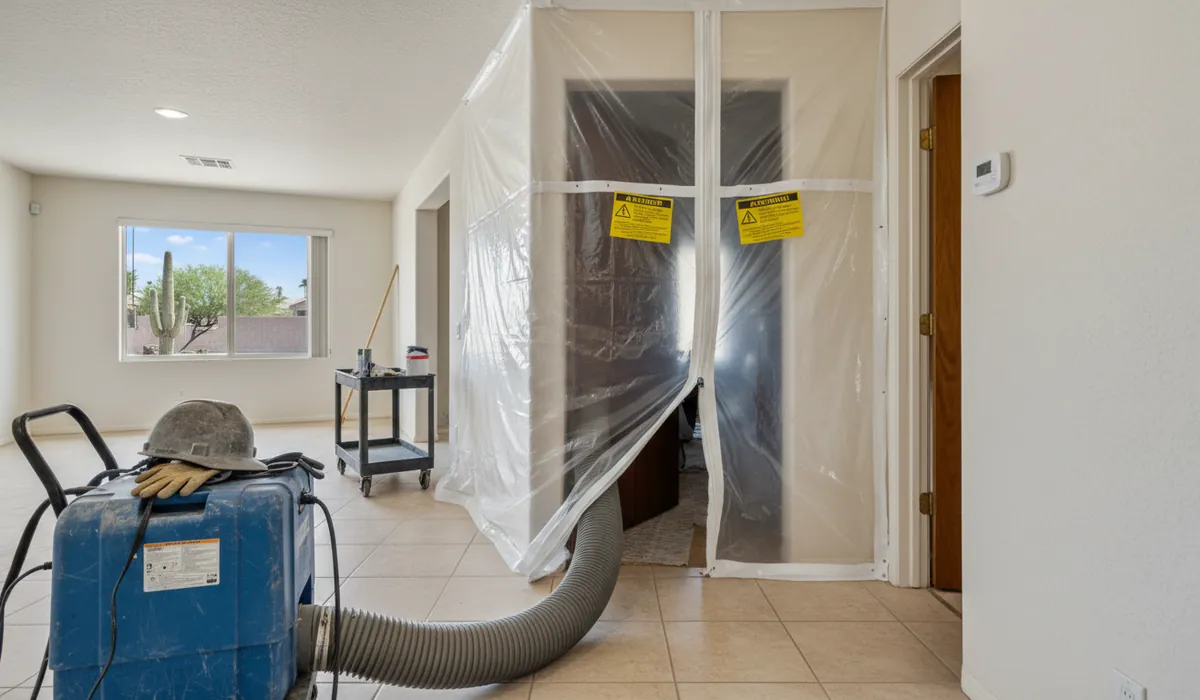
Mold Remediation in progress on a property in Tempe, AZ

What this costs in Tempe

Mold Remediation runs $927–$2,745 averaging $1,836 in this area. Based on Angi's Phoenix-specific figures — Phoenix-area mold remediation runs $927-$2,745, averaging $1,836; a separate source cites a wider $1,500-$6,500 range depending on how much material is affected. Per-square-foot pricing runs $10-25, labor $75-120/hour, and a standalone mold inspection (before any remediation work) runs $300-1,025. What moves a job toward the top of that range is how much porous material has to come out and whether containment has to isolate more than one room.. The things that move a job up its range are the water category, how much square footage is affected, and how long the water sat before extraction started. If you want a number before you call, the water damage cost calculator will get you close.

When it needs doing

  • Visible mold growth on drywall, baseboards, or flooring after any water event
  • A persistent musty odor in a room with no visible source
  • Mold returning in the same spot after a previous cleanup attempt
  • Discoloration or staining on walls or ceilings near a known or suspected leak
  • Increased allergy symptoms or respiratory irritation that improves when away from the property
  • Mold found during a home inspection or real estate transaction

Related reading

These go deeper on the questions that come up most on this job:

Straight comparison

DIY shop-vac, the cheapest bid, or the job done properly

 DIY shop-vacCheapest bidDone properly
Water extractionShop-vac and fans — surface water only, moisture stays trapped in subfloor and wallsBasic extraction, no moisture mappingTruck-mount extraction plus moisture mapping to find water that migrated under flooring and into walls
Drying equipmentA box fan or two, days longer than neededMinimum air movers, pulled earlyCommercial air movers and dehumidifiers, sized to the room and monitored to a dry standard
Water category handlingTreated the same regardless of sourceRarely distinguishedClean, gray, and black water handled to IICRC S500's different safety and disposal requirements
Mold riskNot checkedSkipped unless askedMoisture readings logged until the structure reads dry, since mold can begin in 24-48 hours
DocumentationNoneRarely providedTime-stamped photos and moisture logs, useful for an insurance claim
If it's not actually dryMold shows up later, now a bigger jobChasing a phone number that stopped workingWe come back and re-check until the readings confirm it's dry

How it works

How mold remediation runs

  1. Inspect and identify the source

    We assess visible mold, take moisture readings to find what's feeding it, and identify whether the source is a slab leak, appliance failure, or roof intrusion before any work starts.

  2. Contain the area

    Poly sheeting and negative air pressure isolate the affected space so remediation work doesn't spread spores into rooms that were never affected.

  3. Remove and treat

    Porous material that can't be cleaned is removed and bagged; salvageable non-porous surfaces are HEPA-vacuumed and treated with an antimicrobial before drying continues.

  4. Clearance check and handoff

    A visual clearance check confirms the area is clean before containment comes down — with a written scope for any structural repair still needed.

Get a free mold remediation assessment

A real person answers, day or night. We assess the damage, explain the water category, and give you a written scope — at no charge and with no pressure.

Questions

Mold Remediation questions

How fast does mold grow in Tempe's climate after water damage?

Mold can begin colonizing water-damaged material within 24-48 hours regardless of climate — Arizona's heat doesn't slow that clock, and running air conditioning indoors while it's 110°F outside creates enough indoor humidity for mold to take hold in wet drywall or carpet pad just as fast as anywhere else.

Is there a licensed mold remediation certification required in Arizona?

Arizona has no dedicated statewide mold-remediation license, unlike some states. Mold work involving construction or repair falls under Arizona's Registrar of Contractors rules, and IICRC certification is the industry-standard voluntary credential — ask any contractor what they actually hold before hiring.

What's the difference between mold remediation and mold removal?

“Mold removal” implies eliminating all mold, which isn't realistic or necessary — mold spores exist in outdoor air everywhere. Remediation means bringing mold levels back to a normal, safe range and fixing the moisture source that let it grow indoors in the first place, which is the industry-standard goal.

Can I just clean visible mold myself with bleach?

For small surface areas, maybe — but bleach doesn't penetrate porous material like drywall or wood framing, so it can leave the mold's root structure intact underneath a clean-looking surface. Any area larger than about 10 square feet, or mold following a slab leak or hidden moisture source, needs containment and a moisture-source fix, not just surface cleaning.

Do you charge for an on-site assessment?

No. On-site assessments are free across Tempe and the Phoenix metro — including Mesa, Chandler, Scottsdale, Gilbert, and Phoenix. We assess the damage, explain the water category, and hand you a written scope with affected areas and any mold remediation broken out as their own lines.

Call (480) 531-6541 — Live phone answer, day or night