
Cost Guide
How Much Does Mold Remediation Cost in the Phoenix Area?
Real Phoenix-metro price data for mold remediation, broken out by per-square-foot cost, labor rate, and inspection fee — with every figure sourced.
Mold remediation in the Phoenix area averages $927-$2,745, averaging $1,836 (Angi), though a separate source cites a wider $1,500-$6,500 range. Per square foot it runs $10-$25, labor alone runs $75-$120 an hour, and a standalone inspection (no remediation) runs $300-$1,025. A free on-site assessment turns that range into an exact number.
Published 2026-08-20 · Updated 2026-09-01
Water Damage Tempe is a water damage restoration company serving Tempe, AZ and the Phoenix metro, and mold remediation is one of the most frequently mispriced line items in this market — mostly because it gets bundled into water-damage estimates that don’t actually include it.
What Phoenix-specific sources actually say
Angi’s Phoenix-specific data puts mold remediation at $927-$2,745, averaging $1,836. A separate, wider-ranging source cites $1,500-$6,500 for the same category of work. Both figures are real and both get cited — the gap between them tracks how much square footage each source’s average job actually covered, not a disagreement about method or market.
The per-square-foot and labor breakdown
Below the averages, remediation prices out at $10-$25 per square foot, with labor alone running $75-$120 an hour. A standalone mold inspection — no remediation, just testing and a written assessment — runs $300-$1,025 on its own. That inspection fee matters because it’s the step that determines whether a job lands near the low end of the range or the high end: it’s what confirms how far the mold has actually spread before anyone prices the removal.
Why speed changes the number more than anything else
Mold can begin colonizing water-damaged material within 24-48 hours of a leak or flood. That window is the single biggest lever on where a remediation job lands in the price range, because mold that’s caught at the surface — a ceiling stain a day after a slow roof leak — costs meaningfully less to remove than mold that’s had weeks to work through drywall, insulation, and subfloor. Every day a water-damage source goes unaddressed is a day this line item gets more likely to apply, and more expensive once it does.
Mold remediation is a separate line item, not automatic
Not every water damage job needs mold remediation, and not every remediation quote should be folded into a water-extraction estimate. If mold has already started, it’s priced and scoped separately from the extraction and drying work — a fact that matters when comparing quotes, since a bid that looks lower may simply be omitting a mold assessment rather than being genuinely cheaper for the same scope. Water Damage Tempe’s own on-site assessments identify whether mold conditions are present before anything is quoted, so the two line items never get silently merged into one number.
What’s actually included in a mold remediation quote
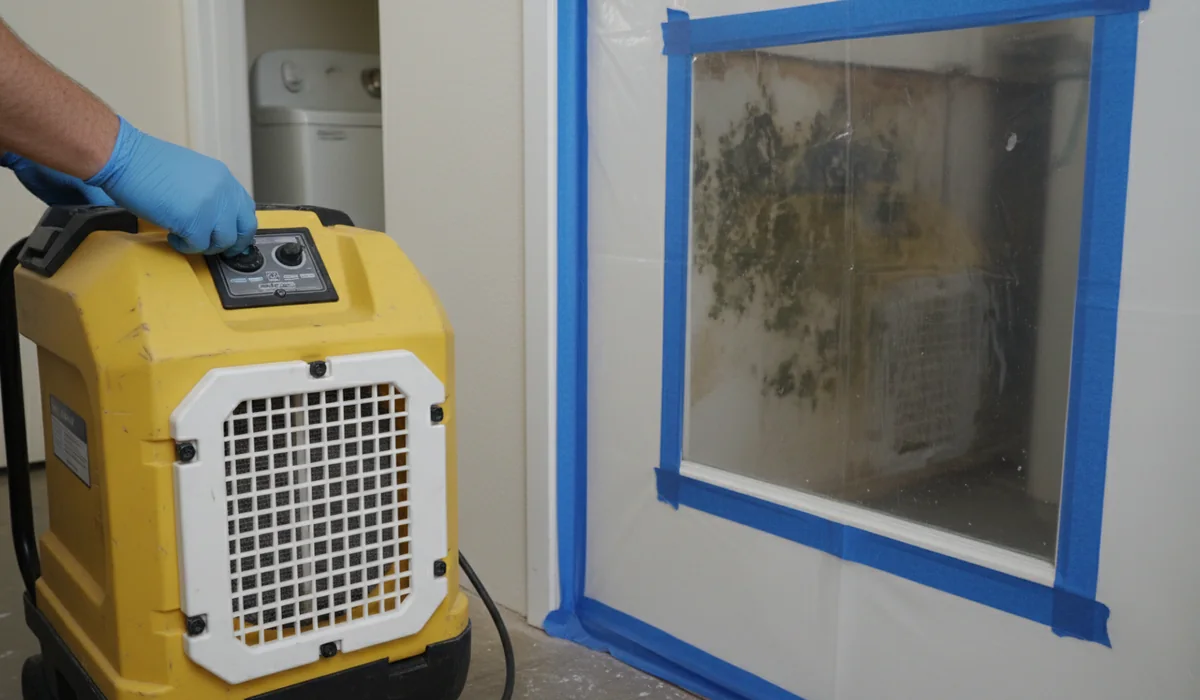
The number on a mold remediation quote covers more than just scrubbing a wall. A proper job includes containment — sealing off the affected area with plastic sheeting and negative air pressure so spores don’t spread to unaffected rooms during the work — plus air scrubbers running HEPA filtration for the duration of the job, removal and bagged disposal of any porous material (drywall, insulation, carpet pad) that’s too colonized to clean, antimicrobial treatment of the surfaces that stay, and a post-work clearance check to confirm spore counts have returned to a normal range before the containment comes down. Each of those steps is baked into the per-square-foot and hourly labor figures above, which is part of why a bid that skips containment or clearance testing can look artificially cheap.
Why Arizona doesn’t license mold remediation separately
Arizona has no dedicated statewide mold-remediation license — unlike Florida or Texas. Mold work here falls under Arizona’s general Registrar of Contractors (ROC) rules whenever it involves construction or repair, plus general OSHA workplace-safety obligations. IICRC certification is the industry-standard voluntary credential contractors in this space pursue, though it isn’t a legal licensing requirement the way a plumbing or electrical license is.
Related questions
The bottom line
If you want this priced for your own property rather than in ranges, we come out and assess at no charge across Tempe and the Phoenix metro — including Mesa, Chandler, Scottsdale, Gilbert, and Phoenix. You get a written scope with the water category and affected areas broken out separately. Call (480) 531-6541.