
Learn
Does Homeowners Insurance Cover Water Damage in Arizona?
The sudden-vs-gradual distinction that decides most Arizona water damage claims, and why flooding is usually excluded from a standard homeowners policy.
Usually, if the cause was sudden and accidental — a burst pipe, a water heater failure, storm-driven rain through a roof — rather than gradual deterioration from a leak that ran undetected for months, which most policies treat as a maintenance issue and exclude. Flooding from rising outside water is typically excluded entirely and needs separate flood insurance.
Published 2026-08-20 · Updated 2026-09-01
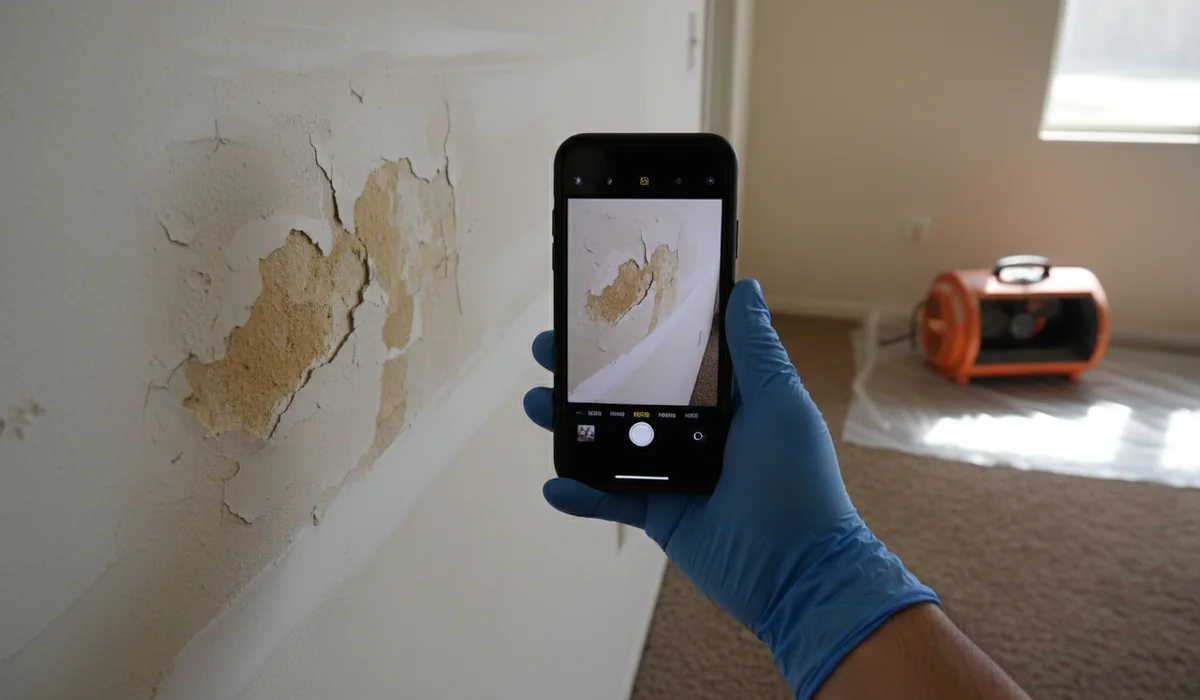
Water Damage Tempe is a water damage restoration company serving Tempe, AZ and the Phoenix metro, and the question “does insurance cover this” comes up on nearly every call — the honest answer depends less on the type of damage than on how it started.
The sudden-vs-gradual line, briefly
The single distinction that decides most water damage insurance claims is whether the cause was sudden and accidental or gradual. A burst pipe or a water heater tank that fails without warning generally clears that bar; a slow leak that ran undetected for weeks or months generally doesn’t, since insurers expect ongoing leaks to be caught and fixed before they cause real damage. This distinction gets its own full breakdown in the dedicated guide linked below, because it’s genuinely the most consequential fact in this whole topic.
What’s typically covered
Sudden, accidental events are the core of what a standard homeowners policy is built to cover: a pipe that bursts, a water heater tank that fails, a washing machine supply line that lets go, and — in most policies — wind-driven rain that enters through a damaged roof or window during a storm. These share one trait: the homeowner had no reasonable way to prevent or predict the specific moment of failure.
What’s typically excluded
Gradual deterioration is the main exclusion — a leak that ran for an extended period before detection is treated as a maintenance issue, not an insurable event. Flooding from rising outside water is excluded from a standard policy entirely and requires a separate flood policy. And in some cases, a slab leak’s plumbing repair itself is excluded even when the resulting damage above the slab is covered, since normal pipe wear is generally not an insurable peril on its own.
Why Arizona’s home-related risks make this distinction matter more
Two of this market’s most common water damage causes sit right on the sudden-vs-gradual line. Slab leaks, driven by Phoenix-area hard water accelerating pipe corrosion and expansive clay soil shifting underground pipe, often run for a while before a wet patch of carpet or a warm spot on tile ever appears — meaning the visible damage can be a lagging indicator of a leak that’s actually been gradual from an insurer’s perspective. That’s a genuinely different risk profile than the frozen-pipe bursts that drive a lot of coverage guidance written for colder climates, where the failure is unambiguously sudden.
Watch for the sewer-and-drain backup carve-out
One exclusion that surprises homeowners regardless of cause: many standard policies specifically carve out sewer or drain backups from standard coverage, requiring a separate endorsement (sometimes called “water backup coverage”) to be added to the policy before that peril is included. A sewage backup can otherwise meet every test for “sudden and accidental” and still be denied purely because the specific peril wasn’t endorsed on the policy — worth checking with an insurer proactively, not just after an event.
What to do before you assume coverage either way
Don’t guess, and don’t wait to find out. Document the source and the affected areas with time-stamped photos before anything is moved, note approximately how long the condition has existed if that’s knowable, and get a written scope from an on-site assessment that identifies the water category and cause. That documentation is what actually determines the claim outcome — not a general rule of thumb about what’s “usually” covered.
Related questions
The bottom line
If you want this priced for your own property rather than in ranges, we come out and assess at no charge across Tempe and the Phoenix metro — including Mesa, Chandler, Scottsdale, Gilbert, and Phoenix. You get a written scope with the water category and affected areas broken out separately. Call (480) 531-6541.